
Powered By



Hemophilia B is a rare bleeding disorder in which a person’s blood is unable to clot properly. Also known as Christmas disease, hemophilia B occurs when the body can’t produce enough clotting factor IX (9). (You’ll usually see Roman numerals used in any discussion of clotting factors.) Risk factors include having a family history of bleeding and being male, per MedlinePlus, a health information website from the U.S. National Library of Medicine. However, about 30 percent of people with hemophilia B have no family history of the bleeding disorder.
Some people undergo genetic testing after being diagnosed with hemophilia B. This type of testing looks for mutations, which are changes in DNA that affect how the body makes clotting factors.
Some members of MyHemophiliaTeam have expressed curiosity about genetic testing. “Just wondering what the recommendations have been for testing children and grandchildren for genetic hemophilia. What age is recommended? Generally, how would insurance view coverage for familial blood testing?” asked one member.
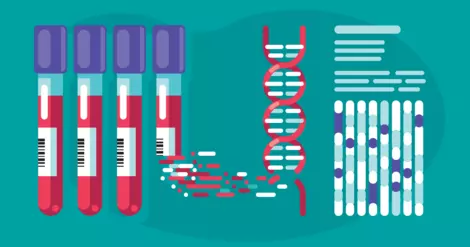
Genetic testing looks for changes in DNA that may cause diseases such as hemophilia. It usually involves sending a blood sample to the lab to be tested for specific gene changes. Genes provide instructions for making proteins. Sometimes, genes have mutations that impair their function, and they can’t properly produce proteins. This can lead to diseases like hemophilia.
Hemophilia B isn’t always inherited. In about 30 percent of people with hemophilia B, the condition is caused by a new gene change that happens before birth. It is not inherited from a parent. Even so, a person who has this new change can still pass it on to their children.
When hemophilia B runs in families, it is passed down through a gene on the X chromosome, according to MedlinePlus. Males typically have one X and one Y chromosome. They get their X chromosome from their mother and their Y chromosome from their father. Because males have only one X chromosome, a change in the gene on that X can cause hemophilia. Females usually have two X chromosomes, one from each parent. They are less likely to have hemophilia because a working copy of the gene on the other X can help make up for the changed one. In rare cases, a female can have hemophilia if both X chromosomes have the changed gene or if the working X chromosome is not active.

A mother who has a mutated factor IX gene on one of their X chromosomes may pass it along to their children. In this situation, a daughter has a 50 percent chance of being a female carrier of the mutated gene. A daughter is less likely to develop hemophilia because the X chromosome from their father may carry a working copy of the gene. According to the World Federation for Hemophilia, it’s possible for women to have symptoms of hemophilia, not only to be carriers.
A son of that mother has a 50 percent chance of receiving the X chromosome containing the mutation and having hemophilia. This is because boys have only one X chromosome. They have a Y chromosome instead of a second X, so there is no extra X to make up for the mutation.
For people diagnosed with hemophilia, genetic testing is mainly used to see which type of mutation they have. Typically, these tests confirm the results of blood tests that show low levels of clotting factors. Family members may also undergo genetic testing to see if they have a mutated gene.
Two X chromosome genes are involved in hemophilia: the F8 gene and the F9 gene. The F9 gene provides instructions for making factor IX, the gene associated with hemophilia B.
Hemophilia B can be caused by one of more than 1,400 mutations in the F9 gene. These include:
Genetic testing can confirm a hemophilia diagnosis and identify the specific gene change causing it. Genetic tests for hemophilia can look for different deletions and duplications of pieces of DNA in the F9 gene or search for a specific mutation. Prenatal genetic testing can be done before birth to test whether an embryo or fetus will develop hemophilia.
For those who undergo in vitro fertilization, the embryo can be tested before being implanted into the uterus. This is called preimplantation genetic testing.
To diagnose hemophilia in a fetus, your obstetrician can do one of two tests — chorionic villus sampling or amniocentesis. This collects a sample of cells from inside the uterus, either of the placenta or amniotic fluid, to assess the genes of the baby and look for abnormal changes. According to Clinica Chimica Acta, testing includes next-generation sequencing, which can be used to:
Prenatal or preimplantation testing can help parents and doctors prepare to care for the baby.
Genetic testing can help find mutations in a person’s DNA. It can also help doctors predict how well someone may respond to treatment. During or after treatment, some people with hemophilia develop antibodies called inhibitors. These antibodies attack and destroy the clotting factor and stop it from working. Overall, inhibitors are uncommon. They happen in about 1 percent to 5 percent of people. The risk is higher in people with large deletions in the F9 gene. Genetic testing can give doctors clues about who may be more likely to develop inhibitors. This can help them choose the best treatment plan. Gene therapy is now available for people with hemophilia B.
Genetic testing can also help people determine if they are carriers of hemophilia, which can help with family planning. Some carriers have mild bleeding symptoms and may not know the cause until they have genetic testing.
“I’m a mom of a hemophiliac, and I’m being tested. Finally, they are taking me seriously that I have bleeding problems too, after suffering for years,” a MyHemophiliaTeam member wrote.
When deciding on genetic testing, think about your needs and your family’s needs.
Many people find knowing the results beneficial, but others may find the test results stressful.
If you need help understanding or processing a hemophilia diagnosis, your doctor may provide a referral to a genetic counselor. Genetic counseling can help you and your family better understand the diagnosis. Genetic counselors may also be able to recommend resources and support for emotional and financial concerns.
Insurance will generally cover genetic testing as long as it’s ordered by a healthcare provider. It’s a good idea to call your insurance company before testing to make sure it’s covered.
Out-of-pocket costs may run from $100 to $2,000, depending on the type of testing. Coverage often depends on whether the insurance company considers the test medically necessary.
Talk to your doctor to learn more about genetic testing. They may refer you to a hemophilia treatment center for testing and treatment. The decision to have genetic testing is up to you and your family. Consider the pros and cons of testing, including costs, how results may affect treatment, and the benefits and risks of knowing.
On MyHemophiliaTeam, people share their experiences with hemophilia, get advice, and find support from others who understand.
Have you or a loved one had genetic hemophilia testing? Let others know in the comments below.
Get updates directly to your inbox.





 Continue with Facebook
Continue with Email
Continue with Facebook
Continue with Email
Continue with Facebook
Continue with Email
Continue with Facebook
Continue with Email
Become a member to get even more





 Join
Join


 Your Privacy Choices

This is a member-feature!
Sign up for free to view article comments.
Would identical twins both be born with Christmas Disease?
We'd love to hear from you! Please share your name and email to post and read comments.
You'll also get the latest articles directly to your inbox.